

Serval Resources
A New Life on AIM.

Good Morning Team.
On 1 April, Serval Resources announced its conditional move to AIM, a £2.9 million fundraise and the formal acquisition of Kalahari Copper Limited, all in one announcement.
At the time of the AIM fundraising, the company’s market cap sat at just over £2 million.
You could have bought the entire company for roughly the price of a modest Lamborghini Centenario Roadster, and what you’d get is a landholding across two of Africa’s most exciting emerging copper belts, a JV in Côte d’Ivoire with gold anomalies popping up everywhere, and a management team that has, between them, built and run mining companies on four continents.
How Did We Get Here?
It’s worth understanding where Serval came from, because the journey tells you a lot about how the current team operates.
In its previous life, Oscillate spent some time being described as ‘diversified,’ which in junior mining circles is often a euphemism for ‘we haven’t quite decided yet.’
The company had hydrogen assets through a subsidiary called Quantum Hydrogen, and a ticker that changed more often than the weather.
Then in January 2025, heavyweight Robin Birchall came aboard as CEO, and with him came a very clear mandate: copper, Africa, AIM and don’t hang about.
This is my kind of story.
The first move was a heads of terms with Evolution Energy Minerals for a JV on the Chikundo copper-lead-zinc prospect in Tanzania — a volcanic-hosted massive sulphide play with previous drilling showing encouraging results.
It’s worth noting that Birchall was Chairman of Evolution Energy Minerals at the time (making this a related party transaction, which was reviewed and approved as fair and reasonable by the independent directors).
Within months, however, something better came along: the Duékoué JV in Côte d’Ivoire in April 2025, and then the transformational Kalahari Copper heads of terms in July 2025.
The Tanzania deal quietly faded as the African copper belt strategy crystallised. The team recognised better ground when they saw it and pivoted accordingly.
By September 2025 the Kalahari Copper deal had been expanded to include the Namibian portfolio, which turned out to be the more advanced of the two assets. The hydrogen subsidiary was sold to Pulsar Helium for $400,000 in Pulsar shares, issued across five monthly tranches.
To bridge the timing gap between receiving those Pulsar shares and needing working capital right now, the company raised a $400,000 bridge loan from its two largest shareholders — Cambrian Limited, controlled by Neil Herbert, and Charterhouse Trustees on behalf of Ian Stalker — structured as convertible notes at 15% coupon with an option to convert at AIM admission at the lower of 85% of the AIM admission price or 90% of the 20-day VWAP.
The fact that the company’s two largest shareholders were willing to provide bridge financing at these terms — and that the conversion mechanics imply they believe the admission price represents fair value or better — can be taken as a reasonable statement of insider confidence.
The fifth and final tranche of Pulsar shares was received on 9 March 2026, completing the exit.
By October 2025 Oscillate had launched the Serval Resources brand and changed its AQSE ticker to SRVL.
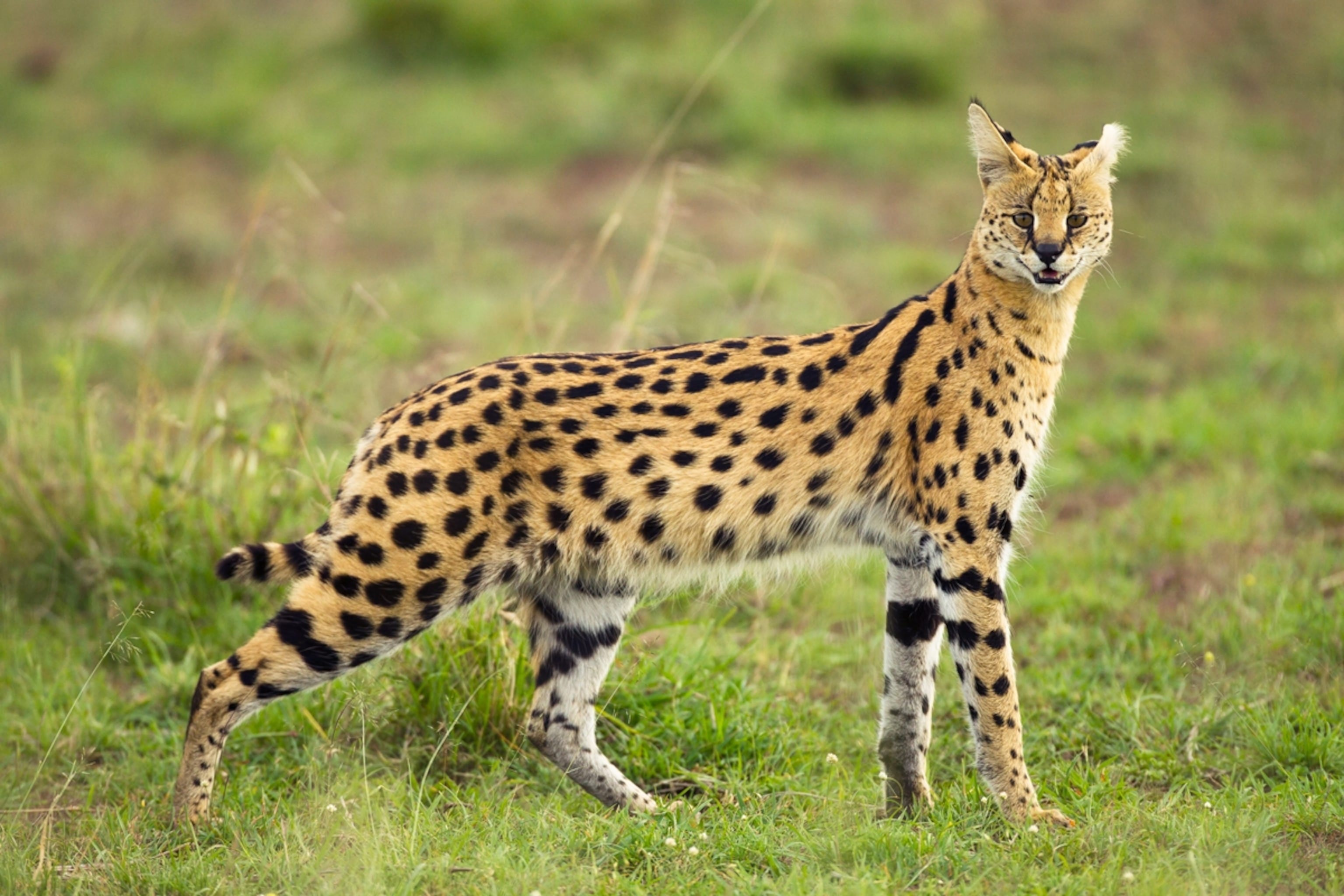
For those not in the know, the Serval cat is a slender, extraordinarily sharp-eyed African predator, renowned as one of the most successful hunters on the continent — catching prey on more than half of its attempts, a strike rate that would be the envy of most exploration geologists.
More specifically, the Serval is a patient, methodical hunter that uses acute senses to locate prey others have missed, then strikes with precision rather than brute force.
As metaphors for a systematic copper exploration strategy in underexplored African belts go, it’s rather well chosen.
By February 2026 the binding sale and purchase agreement for Kalahari Copper was signed — and 1 April saw the AIM admission document published, the £2.9 million placing was conditionally completed, and a retail WRAP offered more to UK retail investors at the same 22.5p per share — following a 50-for-1 share consolidation of the existing capital.
The decision to include a retail offer reflected a deliberate intent to build a broad, engaged shareholder base from day one on AIM — the kind of retail following that sustains a company’s profile and liquidity through the inevitable quiet periods between RNSs.
While the response to the WRAP was more modest than hoped, management remain very focused on aftermarket support and have a programme in place to actively engage with retail investors as trading on AIM begins.
Admission to AIM took place on Monday, with dealings in the new ordinary shares commencing at 8am under the ticker SRVL.
The total raise came in at approximately £2.96 million gross.
It’s also worth noting that the £2 million acquisition payment to the vendor has been structured as a convertible rather than a cash payment on listing — a deliberate decision to ensure that the funds raised go into the ground rather than straight out the door.
Namibia — The Kaoko Basin
This is Serval’s most advanced asset, and arguably the most exciting.
The Kaoko Basin sits in north-western Namibia, and it is interpreted — by both industry geologists and academic researchers — as the south-western extension of the Central African Copper Belt, the greatest sediment-hosted copper province on Earth.
The Central African Copper Belt runs through Zambia and the Democratic Republic of Congo. It’s estimated to host more than 5 billion tonnes of contained copper at grades of up to 4%. It currently produces around 14% of the world’s entire copper supply. If you want a geological address that commands serious attention, then ‘extension of the Central African Copper Belt’ is about as good as it gets.
The geological similarities between the Kaoko Basin and the Central African Copper Belt are well-documented.
Both host significant stratabound (sediment-hosted) copper and silver deposits. The primary target horizon in the Kaoko Basin sits at the contact between the lower Otavi Group carbonates and the upper Nosib Group sandstones and quartzites — a geological interface that, when it hosts copper, can do so in substantial quantities.
What makes the Kaoko Basin particularly compelling from an exploration perspective is the nature of the mineralisation system that’s already been identified.
At the Omatapati prospect, mineralisation has been shown to involve multistage hypogene mineralisation events with a supergene overprint (in other words, this is not a simple single-event sediment-hosted deposit).
Multiple mineralising fluids have passed through the system at different times, concentrating and upgrading the copper, and subsequent weathering has created a near-surface oxidised zone that is easier and cheaper to process than primary sulphides.
This kind of mineralisation complexity is associated with higher-grade and more voluminous deposits in the Central African Copper Belt, and its presence at Omatapati is an encouraging technical indicator.
Serval, upon completion of the Kalahari Copper acquisition, will hold four 100%-owned licences — EPL-6998, EPL-7079, EPL-7081 and EPL-7082 — covering 789 km². Three of the four licences are in the process of being renewed, which is standard procedure in Namibia and expected to be routine, but this is a process dependency worth monitoring.
Namibia is possibly my favourite African mining jurisdiction — stable, well-governed, with supportive fiscal policies, excellent infrastructure and an established technical skills base. It consistently ranks among the most attractive African destinations for mining investment in the Fraser Institute’s annual survey, and the country is gaining new wealth from its offshore hydrocarbon finds.
Previous operator Kalahari Copper completed more than 9,265 metres of drilling across multiple campaigns.
At the Omatapati prospect (on EPL-7081 — the highest-priority target), headline intersections from the 2024 and 2025 campaigns include:
OPR001: 4 metres at 1.1% copper and 54 g/t silver from 52 metres, including 1 metre at 1.9% copper and 1 metre at 122 g/t silver
OPR001: 2 metres at 1.9% copper and 125 g/t silver from 72 metres
OPR002: 20 metres at 1.2% copper and 41 g/t silver from 80 metres, including 5 metres at 2.4% copper and 3 metres exceeding 200 g/t silver
OPR012: 2 metres at 0.59% copper and 30.5 g/t silver from 91 metres
OPR013: 27 metres at 0.59% copper and 34 g/t silver from 61 metres, including 3 metres at 1.52% copper, 3 metres at 1.07% copper and 5 metres at 0.42% copper
OPR014: 2 metres at 0.38% copper and 19.5 g/t silver from 32 metres
Several things stand out.
First, mineralisation occurs from surface — there’s no deep overburden to drill through before reaching the target.
Second, the silver credits are material. Grades of 125 g/t silver and 200 g/t silver represent significant additional value per tonne of ore processed, and in a world of rising silver demand from the solar industry and electronics manufacturing, that matters more than in the past.
Third, the intersections occur across multiple holes and the 2025 campaign confirmed mineralisation extends at depth, demonstrating volumetric potential beyond just the near-surface zone.
And finally, the 27-metre interval in OPR013 suggests mineralised continuity at scale, not just isolated high-grade pods.
Which is all good news.
At the Ondera prospect on EPL-7082 — a separate and distinct prospect from Omatapati — ONR019 returned 1 metre at 1.4% copper and 25 g/t silver from 45 metres.
This was only a single intersection but it confirms that the mineralised system extends beyond Omatapati to at least one other prospect within the licence area. EPL-7082 is essentially a second exploration opportunity within the Namibia portfolio, with its own independent upside.
EPL-6998, the northernmost licence in the Kaoko package, remains largely unexplored by modern systematic methods. A large, geologically prospective licence area that has yet to see a systematic programme is what you want when you’re trying to make a discovery that the market hasn’t already priced in.
Prospectivity across the licences is further confirmed by the presence of active artisanal workings in the area. Artisanal miners are, in their way, some of the most efficient prospectors on the planet — they don’t dig where there’s nothing to find.
The work programme for the Namibian assets is currently being finalised:
H1 2026 — Mapping, Geophysics and Target Refinement: The immediate priority is a systematic mapping and geophysics programme across the licence areas to refine targets and prioritise drill locations. The Omatapati prospect on EPL-7081 will be the central focus given the existing drilling data, but EPL-7082 (Ondera), EPL-7079 and the largely unexplored EPL-6998 all carry independent targets that will be evaluated in parallel.
The goal of this phase is to move from a general understanding of where mineralisation occurs to a precise understanding of where to drill next.
H2 2026 — First Serval-Operated Drill Programme: The first drill programme under Serval’s management will aim to validate and expand the known mineralisation at Omatapati, test strike extensions of the mineralised horizons identified in previous campaigns, and begin building the data density required for a resource estimate.
This is the most significant near-term catalyst for the company — a strong drill programme could be a meaningful re-rating event, particularly if it confirms the strike extent and depth continuity of the 20-metre and 27-metre intersections already in hand.
2027 — Maiden JORC Resource at Omatapati: The medium-term goal is a maiden JORC-compliant resource at Omatapati. This would trigger the first £1.5 million milestone payment to the seller, but more importantly it would transform Serval from an exploration company with promising results into a company with a defined asset — a transition that typically commands a significant re-rating in the market.
Even a modest maiden resource would imply a company value dramatically in excess of the current market cap.
Botswana — The Kalahari Copper Belt
The Kalahari Copper Belt is a northeast-trending Meso- to Neoproterozoic belt approximately 1,000 kilometres long and 250 kilometres wide, running from western Namibia into northern Botswana along the north-western edge of the Palaeoproterozoic Kalahari Craton.
It contains copper-silver mineralisation that is generally stratabound, hosted in metasedimentary rocks folded, faulted and metamorphosed to greenschist facies during the Damara Orogeny.
I too glaze over these kinds of words.
The main target horizon — the one that hosts Khoemacau, Motheo and everything else that matters (more exciting words) — sits towards the base of the D’Kar Formation, near the contact with the underlying red beds of the Ngwako Pan Formation.
This N/D contact is the postcode you want your exploration licences to be delivering mail to.
Historically, exploration in the KCB was severely complicated by the fact that much of the belt is covered by Kalahari sand — in some places tens or hundreds of metres of it — making conventional surface sampling and geological mapping largely useless.
The companies that cracked the KCB did so by developing and applying advanced geophysical techniques: airborne electromagnetic surveys, gravity surveys, seismic surveys and more recently ground-based Audio-frequency Magnetotelluric and Time Domain Electromagnetic surveys, which can image the geology beneath the sand cover with increasing precision.
The competitive advantage in the KCB doesn’t belong to whoever has the best rock hammer. It belongs to whoever has the best geophysics programme and the expertise to interpret the results.
Serval, with a geophysics-first approach and a geological team with specific KCB experience, is playing this game the right way.
In 2008 there were essentially no defined resources in the KCB. Today there are approximately 15 million tonnes of contained copper and growing. MMG acquired Khoemacau — one of the world’s highest-quality new copper mines, with a mine life exceeding 20 years, producing approximately 60,000 tonnes of copper and 1.6 million ounces of silver annually, with expansion underway — for $1.9 billion in 2023.
Sandfire established Motheo in just seven years from discovery to commercial production, against a global average of over 16 years.
These transformations happened in under two decades, and they are not finished. The belt continues to yield new discoveries, and the operators — MMG, Sandfire, BHP through a JV with Cobre, South32, Noronex — are not exploring it because they’ve run out of ideas elsewhere.
They’re there because the geology works.
Botswana is another premier mining destination: politically stable, actively seeking to diversify its economy beyond diamonds, and consistently ranked among the most mining-friendly jurisdictions in Africa.
The government is not passively watching the copper boom — it’s actively building the infrastructure to support it, including the North-west Transmission Grid Connection project specifically aimed at providing power supply to new KCB mines.
Serval holds 18 100%-owned licences covering 1,282 km² in the KCB, with two pending transfer completion. Each licence has been positioned with geological logic, along strike and adjacent to operating mines and known development projects.
Let’s go through them properly.
PL235 and PL232 Cluster — Exploration Priority 1
These are the highest-priority licences in the Botswana portfolio, and for good reason. The PL235 cluster sits directly along strike from MMG’s Khoemacau operations.
Yep.
Regional geophysics has already identified an anticlinal structure (a fold in the rock that creates exactly the kind of trap geometry that concentrates copper mineralisation) extending the full breadth of the licence.
Crucially, the mineralised N/D contact has already been intercepted in 13 historic drillholes across the licence area. Both limbs of the anticline are present, some intersections are shallow, and the geological architecture is directly analogous to the classic deposit style that hosts the Khoemacau mines.
Historic drill results from PL235 include 3 metres at 0.6% copper from 22 metres, 2 metres at 0.4% copper from 61 metres, and 1 metre at 0.4% copper from 172 metres.
These grades are not exactly earth-shattering, but the importance is not the grade but the confirmation that the mineralised contact is present, accessible and mappable across the licence. It is worth noting that the historic drilling campaign was based upon government geophysical mapping that was not detailed enough to define the highest priority mineralisation targets — meaning the best of the ground may not yet have been tested.
That’s a foundation upon which a focused drill campaign is built.
The PL232 cluster sits in even closer proximity to MMG’s Khoemacau operations. The Khoemacau mine complex hosts a remarkable collection of deposits: Zeta UG (20 Mt at 1.6% copper and 30 g/t silver), Plutus (69 Mt at 1.4% copper), Zone 5 (110 Mt at 1.7% copper and 18 g/t silver), Zeta NE (29 Mt at 2.0% copper), Zone 5N (23 Mt at 1.9% copper), Selena North (7 Mt at 1.2% copper), Zone 6 (7 Mt at 1.6% copper) and Ophion (14 Mt at 1.1% copper).
Several of these deposits are not currently being mined — they are known satellite deposits awaiting development. The PL232 licences sit in proximity to these satellites, and the exploration target is to determine whether the same mineralised horizon extends into Serval’s ground.
If it does, even partially, then game on.
The planned work for PL235 and PL232 involves detailed geophysics — combining magnetic, electromagnetic and AMT surveys — to increase resolution on the N/D contact geometry, identify the shallowest sections of the mineralised horizon, and design a drill programme to test the highest-priority targets efficiently.
PL082 and PL061 — Exploration Priority 2
PL082 and PL061 sit directly on strike from Cobre’s Ngami Project — one of the most exciting development-stage copper assets in the entire KCB.
At Ngami, Cobre has defined a maiden mineral resource of 11.5 Mt at 0.52% copper and 11.6 g/t silver, with an upside exploration target of 205 to 308 million tonnes at 0.31 to 0.46% copper and 5.5 to 8.3 g/t silver.
The fracture architecture at Ngami is also considered ideal for in-situ copper recovery — a low cost, low capital extraction method that could dramatically improve its project economics.
To put the Ngami exploration target in context, a confirmed resource at the low end of Cobre’s exploration target would imply a value of several billion dollars.
Serval’s PL082 sits on strike from that.
It hasn’t been drilled yet.
The geophysics programme completed in December 2025 — on time and on budget, it should be noted — was specifically designed to image the N/D contact beneath the Kalahari sand and identify sulphide mineralisation.
Results were expected in Q1 2026 and will be among the first significant newsflow items from Serval post-AIM admission.
Cobre used geophysics — airborne EM, gravity and seismic surveys — as the primary tool to drive its exploration success at Ngami.
Serval is applying the same methodological approach at PL082.
The geological setting is the same.
The target horizon is the same.
Whether the mineralisation extends into Serval’s ground is the question the upcoming results will begin to answer.
But if they find anything, literally anything at all, there’s a very willing buyer next door.
PL231 — Namibia Border Play
PL231 sits on the Botswana side of the border with Namibia, in a location where Noronex and South32 are evaluating highly prospective ground on the Namibian side. The same geophysics programme — EM, AMT and magnetics across approximately 26 line kilometres — was completed at PL231 in late 2025, with results expected shortly.
When South32, one of the world’s largest diversified mining companies, is exploring the ground on the other side of your fence, it adds a degree of geological endorsement to the neighbourhood.
PL085 — Bushman Lineament
PL085 targets structurally controlled copper mineralisation associated with the Bushman Lineament in eastern Botswana, adjacent to the Kopano mine.
It is a different geological play from the rest of the KCB portfolio and is not a current priority for Serval’s exploration programme — the team is focused on advancing the higher-priority targets first.
Going forward on the Botswana assets:
H1 2026 — Geophysics Results: The results of the completed PL082 and PL231 geophysics programme are the first major newsflow catalyst from the Botswana assets.
If the surveys have successfully imaged the N/D contact at reasonable depths and identified sulphide targets, the company will move to drill programme design at the highest-priority locations. These results could, depending on their quality, be transformational for market perception of the Botswana assets.
H1 2026 — PL235/PL232 Detailed Geophysics: Detailed geophysics and soil sampling across the PL235 cluster will refine the 13 historic drillhole intercepts into a systematic drill target. The goal is to identify the shallowest and highest-grade sections of the N/D contact for maximum drilling efficiency.
H2 2026 — Scout Drill Programme: The first Serval-operated drilling in Botswana will prioritise the targets with the best combination of geophysical response and existing data. PL235/PL232 and PL082/PL061 are the leading candidates.
A scout programme confirming and expanding the N/D contact mineralisation in either licence area would represent a major step toward the Botswana portfolio becoming a resource-definition stage asset.
2027 onwards — Resource Definition: The medium-term goal is a maiden JORC resource, which given the scale of the land package and the quality of the neighbours could ultimately be a multi-deposit story.
The KCB has consistently demonstrated that once the right geological setting is confirmed, deposits tend to occur in clusters — Khoemacau has at least eight named deposits in a relatively compact area. Serval’s 1,282 km² of licences, positioned across multiple strike extensions of known producing deposits, provides the real estate for a multi-deposit thesis to develop.
Côte d’Ivoire — The Duékoué Project
The Duékoué project is perhaps the most untested of the three assets but in some ways the most intriguing.
It sits proximate to the Archean/Proterozoic boundary in western Côte d’Ivoire — a crustal setting associated globally with Iron Oxide Copper Gold systems, the deposit type that includes Olympic Dam in Australia (the world’s largest uranium deposit and one of its largest copper deposits), the Carajás province in Brazil (host to some of the world’s largest iron ore and copper deposits), and a number of other giant mineral accumulations.
The prospect was originally identified by SODEMI — the Ivorian state mining company — in the 1960s and 1970s. Their work identified a high molybdenum-in-soil value of 300 ppm, with extensive follow-up soil sampling across more than 25 square kilometres confirming an arcuate Mo-in-soil anomaly extending some 3.2 kilometres, with values exceeding 1,000 ppm Mo in places, associated with copper values of 250-300 ppm.
Critically, the overall pattern of the anomaly forms an approximately circular structure some 2.5 kilometres in diameter — the kind of geometry consistent with a mineralised intrusive body, whether porphyry or IOCG in origin.
SODEMI’s limited pitting and trenching returned molybdenum values exceeding 0.5% Mo — reasonably high, and consistent with a significant system at depth.
That data then sat untouched for decades as Côte d’Ivoire navigated periods of political difficulty. The country has since stabilised and established itself as one of Africa’s more attractive mining destinations — supportive mining code, improving infrastructure and among the shortest times from discovery to production on the continent.
The SODEMI data simply waited for someone with modern techniques to come along and do something with it.
Serval entered through a JV and earn-in with La Minière de l’Éléphant (Laminele), signed in binding form in September 2025, with heads of terms having been announced in April 2025. The terms are capital-efficient from Serval’s perspective: a 100% interest is earnable through $650,000 of exploration expenditure over 36 months, or alternatively via a one-off payment of $1 million on transfer.
There’s a 0.5% net smelter royalty with a $5 million buyback option, and a payment of $0.025 per pound of contained copper equivalent in any JORC resource — aligning Laminele’s ongoing interests with exploration success.
(It’s worth noting that Max Denning, Serval’s NED, owns 15% of Laminele, making this a related party transaction reviewed and approved as fair and reasonable by John Treacy as independent director.)
Serval moved with impressive speed on Duékoué, commencing fieldwork in May 2025 — within weeks of the initial JV announcement — and completing it before the rainy season in July. A total of 204 soil samples across seven lines and a ground magnetic survey were completed entirely on time and on budget.
The Phase 1 results confirmed the historical SODEMI anomalies. Maximum copper returned 456 ppm; maximum molybdenum 295 ppm. The shape and tenor of the anomalies were validated, with the northern limb of the granitic intrusion remaining the most promising target with Mo anomalism extending close to three kilometres, and the SODEMI dataset accurately georeferenced — meaning decades of historical data can be used with confidence for the first time.
Then came the unexpected bonus. When 187 of the 204 samples were resubmitted for gold analysis in November 2025, seven returned moderately anomalous gold concentrations above the 21 ppb threshold, with one sample returning 45 ppb.
More importantly, five of those seven anomalous gold samples coincided with elevated copper values in the same sample. The Cu-Au association in soil is a classic IOCG signature, and very good news.
Exploration funds have not been allocated to Côte d’Ivoire for the time being, as the team is focused on progressing its priority projects in Namibia and Botswana. The asset remains very much in the picture, however, and management have a plan to address it in due course.
When the time comes, the cost of entry remains so low that even a modest confirmation at depth would justify the expenditure many times over — and if the IOCG interpretation is correct, the scale potential is substantial.
The Team: The Right People For the Job
In junior mining, the team is everything.
Robin Birchall (CEO) has over 20 years of experience in financing and managing resource companies. He was Chairman of Evolution Energy Minerals, Chairman of Awale Resources, CEO and Director of Giyani Metals Corp, Executive Chair of Silver Bear Resources, and a Non-Executive Director of Helium One Global. He has raised money in difficult markets, managed exploration programmes across multiple African countries, and demonstrated an ability to move quickly and decisively when the right opportunity appears.
John Treacy (Non-Executive Chairman) qualified as a capital markets and M&A solicitor before moving into corporate finance advisory, where he has advised on IPOs, acquisitions, debt restructurings and fundraisings at several prominent UK brokerages. He is the steady hand on the tiller for the AIM admission process and the governance framework that comes with it.
Max Denning (Independent NED) co-founded and ran Tungsten West and previously held the role of GM Commercial and Finance at Pan African Minerals. He brings operational mining experience and genuine expertise in the future metals landscape, as well as the Côte d’Ivoire connection through his Laminele shareholding — a relationship that, properly managed and disclosed, brought Serval an asset it might not otherwise have accessed.
Andrew Benitz joins the board as a Non-Executive Director with effect from admission, adding further depth to a team already well-equipped for the task ahead.
Luhann Theron (Chief Geologist) has 13 years of exploration experience specifically in sub-Saharan Africa, spanning the Central African Copper Belt, the Kalahari Copper Belt, the Kalahari Manganese Fields and Greenstone Belt gold deposits. He is not a generalist — he knows exactly the geological systems he is being asked to explore.
Kobus van den Heever (Senior Geologist) spent four years with De Beers Group in field exploration before transitioning to exploration consultancy Lambda Tau. The De Beers training is renowned for its methodical, systematic, technically rigorous approach to mineral exploration — qualities that map directly onto what Serval needs at this stage of its programme.
Richard James (CFO) trained at Price Waterhouse in Auckland before building an extensive career in junior mining CFO roles across Africa, Central Asia and North America. His experience covers IPOs, mergers, acquisitions and multiple fundraisings. He joined in February 2026 — perfectly timed for the AIM preparation — and brings exactly the financial management discipline that a company navigating a complex multi-asset acquisition and market listing needs.
Rita Lombard (In-Country Manager, Botswana) is COO and Co-Director in the Risk Advisory practice of BDO in Botswana, with a career spanning 33 years. In African mining, in-country relationships, regulatory knowledge and local networks are not peripheral considerations — they are central to getting exploration programmes approved, permitted, staffed and executed efficiently.
Cathy Malins (Head of Business Development and IR) ran investor relations at Petra Diamonds through the company’s growth from a £12 million market cap to over £1 billion at its peak. Her involvement signals that Serval is serious about building a genuine investor following on AIM, not just completing an admission and hoping for the best.
Deal Structure
The acquisition of Kalahari Copper is the cornerstone transaction and understanding the deal structure is important for assessing overall risk and reward.
The consideration comprises several layers.
First, rather than a cash payment on listing, the £2 million acquisition price has been structured as a convertible — a deliberate decision that ensures the funds raised go into the ground rather than straight out the door on day one.
Second, the seller — KCL Investments — receives new ordinary shares representing just under 30% of the company’s issued capital on AIM admission, structured specifically to keep the holding below the Rule 9 Takeover Code threshold that would otherwise require a mandatory offer to all shareholders.
Third, milestone payments of £1.5 million each triggered separately for Botswana and Namibia upon a maiden JORC resource, first Pre-Feasibility Study and first Final Investment Decision — maximum additional consideration of up to £9 million in aggregate. It is worth noting that by the time these milestone payments are triggered, the company’s valuation should be substantially higher than today — making the payments proportionately more manageable and entirely consistent with a business that has de-risked itself through exploration success.
Fourth, a 1.9% net smelter royalty on copper from all licences in both countries, with a buyback option exercisable after delivery of a Definitive Feasibility Study at a value determined by independent expert.
Fifth, an anti-embarrassment fee of 10% of proceeds if any licence is on-sold within five years.
And finally, two options each over 3% of the company’s post-admission capital at par value — the first with a three-year term, the second with a five-year term exercisable only after publication of the first maiden JORC resource on any Namibian licence.
The milestone payment structure is well-designed. Rather than paying a large premium upfront for assets at exploration stage, Serval commits to modest outgoings now and larger payments later — but only if exploration actually works. The seller’s milestone receipts are entirely dependent on Serval’s exploration success. That alignment of interests between vendor and company is what you want to see.
The fundraise at AIM admission totalled approximately £2.96 million gross at 22.5p per share following the 50-for-1 share consolidation, plus the Winterflood WRAP retail offer. A number of strategic investors are also in discussion regarding further investment, with any additional proceeds equally earmarked for exploration rather than overhead.
At a market cap of just over £2 million at the time of the AIM fundraising, Serval was being valued at approximately nothing on a per-acre basis. The combined Namibia and Botswana land package exceeds 2,071 km². The Botswana ground alone is adjacent to mines that collectively represent billions of dollars of enterprise value.
The Namibia ground is in a basin with the geological credentials of the world’s most prolific copper province.
And Côte d’Ivoire offers IOCG-style upside at a cost of entry that is tiny relative to what confirmation of that hypothesis could be worth.
The Bottom Line
Serval Resources is a small, early-stage copper explorer with a credible and experienced team, a coherent and well-executed strategy, and a carefully assembled land package across two of Africa’s most geologically compelling copper belts — complemented by an intriguing IOCG wildcard in Côte d’Ivoire that has already delivered unexpected gold anomalies on top of the copper and molybdenum it was sent to find.
In fifteen months, the team executed a JV, completed multiple field programmes on time and on budget, expanded a transformational acquisition, disposed of non-core assets with ingenuity and financial efficiency, launched a brand, hired key personnel, raised bridge financing from existing shareholders who are clearly bullish on the outcome, and published an AIM admission document.
That’s not bad at all.
On 27 April 2026, Serval Resources officially began trading on AIM.
As Robin Birchall put it:
‘This is a landmark day for the Company as the AIM market will provide the foundation from which to grow the business. I would like to thank our team and all our advisers who have worked so hard to get us to this point. We would also like to thank all the investors who have supported us in our plan to create a mid-cap copper and future-metals exploration and development group. Our priority now is to put the funds to good use by advancing our exciting exploration targets in Namibia and Botswana.’
If this team finds even one significant deposit across their combined licence package — and the geological setting, neighbour quality, team experience and existing data all suggest the ground is prospective — the numbers look very different indeed from the starting point.
The geophysics results are coming. The drill programmes are being planned.
They plan to find metal.
That’s the AIM anyway.